
Youth Soccer Practice at the Recreational Level
Running practices in recreational soccer can feel overwhelming, especially with limited time, limited help, and a wide range of player abilities. This section focuses on how to design and run practices that work in the real world—not idealized training environments. The goal is to help players learn, stay engaged, and enjoy coming back each week.
How to Use These Practice Articles
Planning a youth recreational soccer practice is challenging. These articles are designed to work together as a simple, repeatable system for planning effective practices—especially for volunteer coaches with limited time and experience.
Rather than reading each article in isolation, use them as parts of one planning process.
The Practice Planning Framework
Youth recreational soccer practices should follow this structure (promoted by US Soccer):
Play → Drill → Play
This framework is explained in detail in Practice Design, and it guides how the other articles are used.
How Each Article Fits
- What to Teach
Start here.
The game reveals what your team needs most. This article helps you decide what to focus on in practice based on real game situations, not abstract coaching theory. - Drill Design
Once you know what you are teaching, this article helps you choose or adapt simple, realistic drills that fit your players, field space, and time constraints. - Practice Design (Play–Practice–Play)
This article shows how to organize the entire practice so learning happens naturally through play, reinforcement, and repetition. - Practice FAQ
This article covers common questions and challenges unique to youth recreational soccer practice.
How to Use This System Week to Week
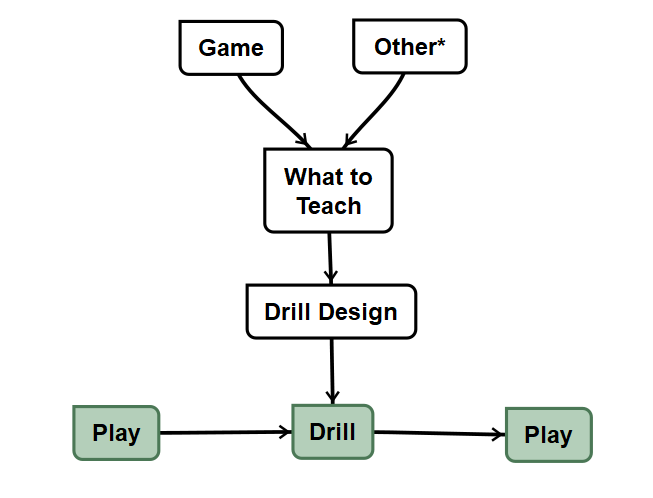
* Other indicates age appropriate rules, important stoppage plays, next level skills
The diagram above shows how the process repeats:
- Game play identifies priorities
- Priorities determine what to teach
- Teaching goals drive drill selection
- Drills are placed inside a Play–Practice–Play practice
- The next game restarts the cycle
This is not a “perfect practice” model.
It is a practical decision-making framework designed to help recreational coaches run organized, purposeful practices and make steady progress over the season.
Recreational practices do not need to look polished or perfectly planned to be effective. Consistency, clarity, and a focus on a few important concepts go a long way. These articles are meant to help you build practices that work for your team—not someone else’s ideal version.