
Game Day – What Youth Recreational Soccer Coaches Actually Need to Do
This article focuses on how to manage game day at the recreational level — not tactics, formations, or advanced strategy.
The goal is to reduce chaos, lower anxiety, and help kids play in a supportive, organized environment.
Topics such as referee interactions, blowout games, lineup and substitutions, injuries, what to correct and how, and sideline behavior are covered in separate articles, but they are part of game day as well.
This article focuses on how to manage game day at the recreational level from start to finish—not tactics, formations, or advanced strategy.

What to Bring
Before you do anything else, make sure you have what you need.
A Checklist: Game-day chaos often starts with forgetting something basic. Pack your bag the night before.
Essential:
- Game card already filled out with player names (if required by your league; your league will provide the form)
- Game balls (home team typically provides, but bring backups)
- Player cards (also called “roster cards” or “passes”—these verify player eligibility; your league provides them at season start) and access to emergency contact information
- First aid kit (bandages, ice pack, basic supplies)
Helpful to have:
- Ball pump
- Extra pinnies (for a goalkeeper without a jersey or conflicting colors)
- Cones (for sprinkler holes, missing corner flags, or field issues)
- Water (for you and as backup for players)
- Clipboard or lineup card (if you use one)
- Stopwatch or phone for tracking substitution times
Emotions on Game Day
Game day can be hectic and stressful. The best thing you can do is expect chaos, especially in younger age groups. Keeping your cool helps everyone else keep theirs.
Games can include:
- missed calls
- blowouts where one team runs up the score
- parent tension, especially if their child is struggling
- your own frustration when lessons you’ve taught seem forgotten
- injuries
- kids asking you a million questions
- players arriving late
- players getting down on themselves
But there’s also:
- watching things “click” as the team starts to pass or work together
- the excitement of seeing players give it their all
- parents cheering and laughing on the sideline
- a player who has struggled finally nailing a skill in a game
- the thrill of a close match
- kids smiling and having fun
If you feel yourself getting frustrated before or during the match, step back. Your emotional state sets the tone more than anything you say. Manage the stressors, and deliberately look for the good moments.
Check Field Conditions
If you arrive early, walk the field quickly and look for:
- sprinkler heads, holes, or uneven areas (mark with cones if needed)
- broken glass or debris
- goal anchoring—especially on windy days (unsecured goals are extremely dangerous)
- standing water or muddy areas that could cause injuries
Before the Match Starts
Plan to arrive 30 minutes before game time. Tell players to arrive 30 minutes early as well—but expect some to trickle in closer to kickoff.
Your goals before kickoff are simple:
- get the kids mentally ready
- make sure they know what position they’re playing
- make sure they know when they’re going in
Clarity reduces anxiety—for you and for them.
Player Pre-Game Warm-Up
Have a parent or assistant run the warm-up. Don’t do it yourself.
In reality, the warm-up will be about 10–15 minutes, with players arriving at different times. You are not trying to tire them out—just warm them up and get them focused.
The warm-up should not involve teaching new skills. This is not the time for instruction. It should be:
- organized
- serious but supportive
- familiar
A simple warm-up works best: light passing, movement, and shots on goal. The purpose is to:
- warm up bodies
- get feet on the ball
- shift players mentally into game mode
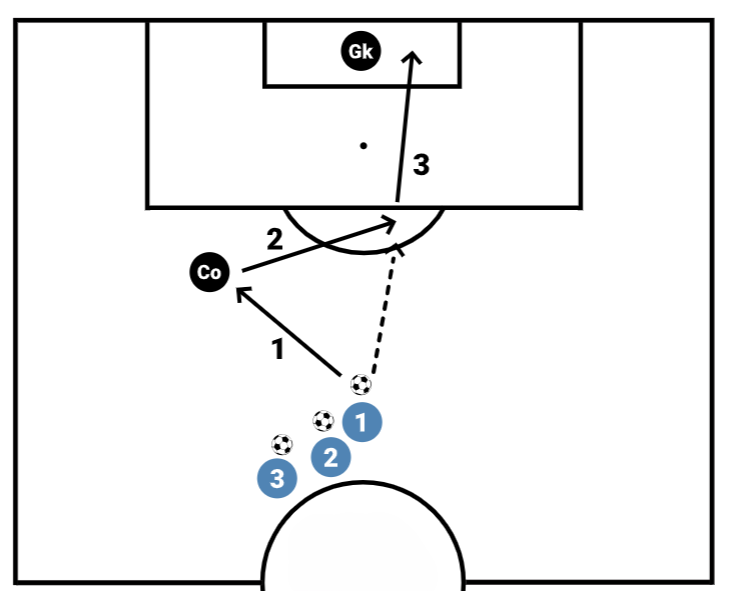
The tone of the warm-up sets the tone for the game. If the warm-up is sloppy, the game often is too. If the warm-up is organized, the game usually follows.
Starting Lineup
Which players play where, who starts the game, and who will sub for them is an entire topic in itself. See lineup and substitutions for how to develop a resilient, flexible lineup and substitution plan.
Do not arrive at the field without a plan—even if that plan will change due to day-of factors outside your control. The plan is what allows flexibility. Showing up unprepared and trying to build the lineup on the sideline right before kickoff is a reliable way to create stress and chaos.
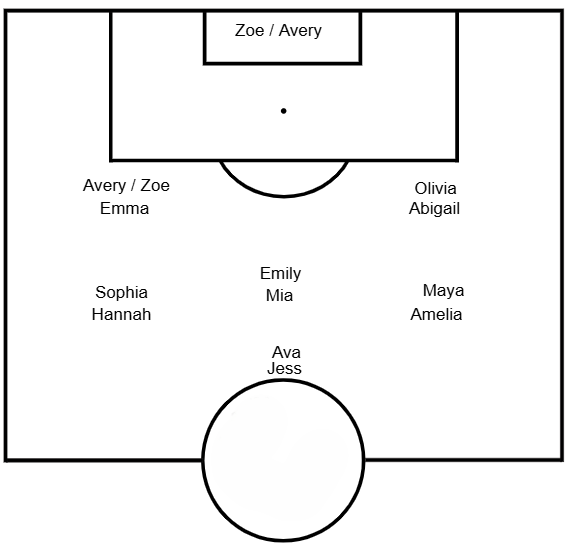
The minute you get to the field, you will be busy organizing players, monitoring warm-ups, and communicating positions. The lineup needs to be done before you arrive.
Talking to Players During Warm-Up
Your most important pregame task is talking with players as they arrive and warm up.
This is the best time because:
- it’s easier to talk one-on-one or in pairs; players focus better and ask questions
- players arrive at different times—you can’t wait until everyone is present to give individual instructions
In the example lineup above, gather Sophia, Hannah, Maya, and Amelia to talk. If the players are young, you might want to split it further, and separate left from right so you can physically point out their locations on the field.
Tell players:
- what position they’re playing
- whether they’re starting on the field or off the field
- ask if they have questions about where they need to be or what they need to do
Give very brief reminders, such as:
- “Stay on the left side.”
- “Play higher as a forward.”
Keep it to one point—maybe two. Avoid calling instructions for one player out to the whole group. Kids pay more attention in small conversations and are more likely to ask questions when they’re unsure.
Referee Check-In
This usually occurs in the 10 minutes before kickoff.
Players line up while the referee checks for jewelry and watches, confirms shin guards are on, and verifies cleats are legal. Player cards are typically presented at this time to confirm registration and eligibility.
What If You Are Short Players?
The minimum is usually seven players (confirm with your league). Below that, you must forfeit.
Some leagues allow guest players—kids from another team who can fill in for one game. Rules vary widely, so check ahead of time.
The opposing coach may offer to play down (match your numbers) for fairness. This is optional and depends on the situation. There’s no single right answer—just communicate clearly.
Coin Toss
The coin toss usually happens about five minutes before kickoff and determines who kicks off and which side each team starts on. One or two players from each team meet the referee at midfield. Coaches do not participate. When the referee calls “Captains,” that’s the signal for players to go.
You don’t need official captains or armbands unless your league requires them. Ways to choose players include:
- rotating different players each game
- always including the goalkeeper
- choosing a shy player to give them a special role
- picking whoever is nearby
The team that wins the toss chooses either kickoff or which side to start on. Teach players that the decision should be based on field conditions:
- sun position (e.g., sun in the keeper’s eyes early)
- wind
- field conditions (mud, slope, uneven grass)
If there’s no advantage either way, choosing kickoff is fine. If the coin toss winner chooses kickoff, the other team chooses the side. If the coin toss winner chooses a side, the other team gets kickoff.
One Consistent Ritual
Finish your pregame the same way every time: a team cheer. Consistency matters. After the cheer, the game is on.
What to Focus On Once the Game Starts
Time and Substitutions
- Keep track of subs. You’re not aiming for perfect time equality.
- If things are going well and no one is exhausted, sub based on time.
- Typical guideline:
- U9–U12: each player subs once per half
- Longer halves (e.g., 45 minutes): up to two subs per half
- Maintain a balanced field whenever possible.
Positioning
- About 90% of in-game corrections should be reminders to get back into position (move up, drop back, slide over).
- Don’t overcorrect—aim for the general area, not perfection.
Limited, Simple Corrections
- Example: throw-ins — “Keep your feet on the ground.”
Cheering
- This should take up most of your energy.
- Call out specific positive actions.
- Encourage effort, awareness, and teamwork.
What You Don’t Need to Worry About
- Correcting every mistake.
- If there are numerous mistakes
- Whether the team you are playing has skills your team doesn’t have
Halftime
At halftime, the kids rest and get water. Make sure they hydrate—especially younger ages, who may not unless reminded.
You have a few jobs:
- Switch goalkeepers if that was the plan.
- Take inventory of who finished the half on the field.
- Set the starting lineup for the second half, aimed at balancing playing time from the first half
Coaching points:
- Check in with any player who seems emotional or frustrated.
- Limit corrective coaching to quick reminders and positional prep.
- Give lots of positive feedback about what went well.
If you give a pep talk, keep it short and upbeat. The goal is mood-setting, not teaching.
Example: “Fight hard! Spread out like pepperoni! Pass and score! You’ve got this!”
Less is more at halftime. A few reminders, a pep talk, and send them back out.
End of the Game
The whistle blows, and the game is over—win, loss, or tie.
Logistics:
- Gather your team for a cheer for the opposing team.
- Players line up to congratulate each other.
- Coaches typically follow behind and shake hands with the opposing coach and referees.
Important notes:
- A chaotic or uneven game doesn’t mean it was unsuccessful.
- Address unsportsmanlike behavior from your players after the game (refusing to line up, refusing handshakes, etc.).
- Confirm the final score with the referee.
What to Say to the Kids
Only positive remarks. No exceptions—even if you’re frustrated about what just happened. No big speeches. If they win, congratulate them. If they lose, spirits may be low and a player or two may blame themselves. This is where being specific matters most.
Avoid generic praise. Instead, say something true:
- “You made some great passes today.”
- “Your throw-ins were strong.”
- “You had some great clears out of the back.”
Post-Game Parent Conversations
Parents may sometimes want to talk right after the game—about playing time, positions, or something that happened during the match. Remember: most parents are simply anxious about their child’s experience and are not trying to be confrontational.
If a topic requires a longer or more thoughtful conversation, defer it. A simple, “Let’s set up a time to talk this week,” is usually more productive than a parking-lot discussion when emotions are still high—for both of you.
If the question is quick and factual, it’s appropriate to answer briefly. Example:
“Why didn’t Sarah play forward today?”
→ “I’m rotating positions so everyone gets experience in different spots.”
As a recreational soccer volunteer coach, you are expected to do the best you can—no more and no less. Even if you have extensive soccer experience, this is not a Division I college team. Expectations at the recreational level are different from those in more advanced or competitive environments.
Approach conversations with humility and realism. Avoid getting pulled into defending individual decisions. Instead, explain your general reasoning, listen to the parent’s concern, and keep the focus on the overall experience.
If a conversation starts to feel like a defense, a simple reframing can help:
“I’m doing my best to balance the needs of the team with the needs of each individual player, and I want your child’s experience to be as positive as possible.”
This reinforces the purpose of recreational soccer without escalating the situation.